How is members' participation in cultivation documented?
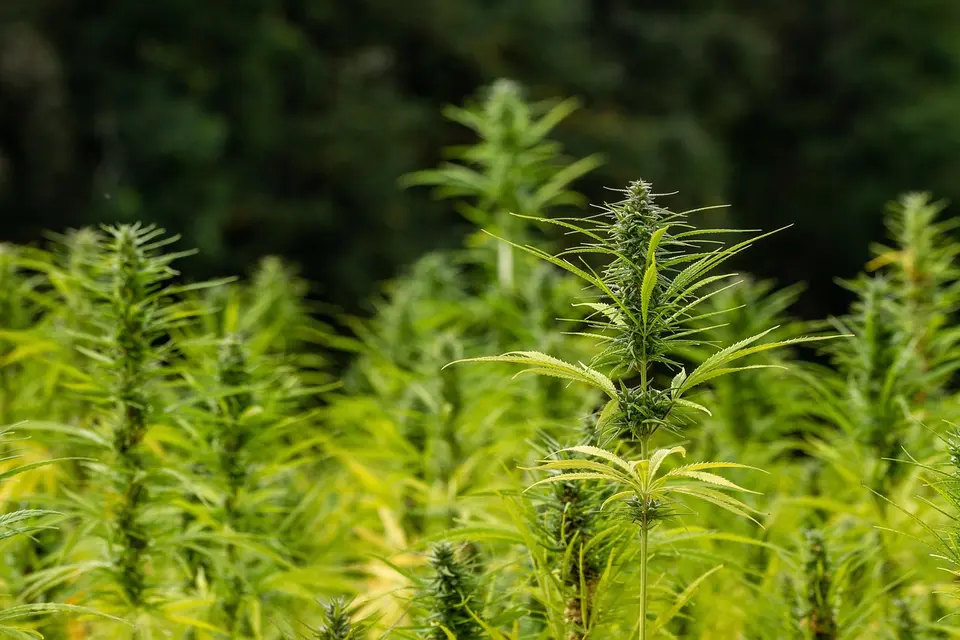
The law requires members to take part actively, but does not prescribe a particular form for proving it. In joint home cultivation, members must actively take part. This is the case in particular if they take part personally in cultivation and in activities directly connected with it (§ 17 para. 2 KCanG). How the association records this is decided by the association within the legal framework, usually in its articles or internal rules. The authority checks whether the association complies with the requirements. This article explains what the law regulates and what an association can usefully document.
What the law stipulates on participation
In cultivation associations, cannabis may only be grown jointly by members (§ 17 para. 1 sentence 1 KCanG). Members must actively take part (§ 17 para. 2 KCanG). Marginally employed persons may only be involved in activities directly connected with cultivation or passing on if they are members. Other paid employees and non-members may only carry out activities that are not directly connected with these (§ 17 para. 1 sentences 2 to 4 KCanG). Breaches are regulatory offences (§ 36 para. 1 nos. 12, 13 and 13a KCanG). Cultivation associations that are associations must also provide in their articles for a minimum membership period of three months (§ 16 para. 5 KCanG).
Why documentation makes sense
The association must ensure to the authority that it complies with the requirements of the law (§ 11 para. 3 no. 3 KCanG). The authority inspects regularly and on specific occasion (§ 27 para. 1 KCanG), may inspect all business documents and data media (§ 28 para. 2 KCanG), and may request documents and information (§ 28 para. 3 KCanG). Members, authorised representatives and employees must provide information (§ 29 para. 2 KCanG). Traceable documentation of participation helps the association prove that cultivation is joint. For members, it creates clarity about who takes on which tasks.
Who sets the form
The association sets the form. This is done in the articles or in internal rules that apply to all members. The articles govern the association's relationship with its members, and the principles of association law (§§ 21 ff. BGB, German Civil Code) form the framework. There is no nationwide uniform form of proof. If the competent authority sets specific requirements in an individual case, for example as conditions attached to the permit (§ 13 para. 4 KCanG), the association should ask it directly.
What an association can document
- which tasks a member has taken on, and when,
- assignments or hours, where the articles provide for them,
- a written confirmation from the member of their duties,
- attendance at cultivation and harvest activities, insofar as this is organisationally possible.
The association decides which of these details it requires. What matters is that they are traceable and kept. Personal data must be handled in line with data protection rules. What the law does require is the documentation of quantities and handovers (§ 26 para. 1 KCanG), which must be kept for five years (§ 26 para. 2 KCanG).
Typical forms of participation
Participation can take different forms: caring for the plants, harvesting, drying, helping with handover or administration. The law stresses the personal participation in cultivation and in the activities directly connected with it (§ 17 para. 2 KCanG). A good system of proof records who has taken on what, without noting every small detail. A list with name, task and date can be a practical approach, provided it is kept complete.
When participation does not work
If a member contributes hardly anything, the association should raise this early. The articles should regulate what follows if a member permanently fails to take part, and these rules should be explained to all members in advance. The law obliges members to take an active part, but names no minimum number of hours.
What members should do
Ask for your participation to be confirmed in writing, if the association offers this. Ask which form of proof applies and where it is stored. Keep a record of your own contributions so that you keep track.
The basics of joint home cultivation are explained in What does joint home cultivation in a club mean? Who may grow cannabis in the club is answered in Who may grow cannabis in the club themselves? The duties on participation are described in Do you have to help with cultivation yourself in the club? The minimum age is explained in May young people become members of a club? General information is in the cultivation associations and clubs section.
Frequently asked questions
Who may grow cannabis at the club?
In cultivation associations, cannabis may only be grown jointly by members (§ 17 para. 1 sentence 1 KCanG), and members must actively take part (§ 17 para. 2 KCanG). Non-members and other paid employees may only carry out tasks that are not directly connected with cultivation or passing on.
How can I prove my participation at the club?
The law sets no form. Have your tasks and assignments confirmed under your association's rules and keep a record of them. Ask the board which form applies and where the details are stored.
Sources
- KCanG § 11 Erlaubnispflicht
- KCanG § 13 Inhalt der Erlaubnis
- KCanG § 16 Mitgliedschaft
- KCanG § 17 Anforderungen an den gemeinschaftlichen Eigenanbau
- KCanG § 26 Dokumentations- und Berichtspflichten
- KCanG § 27 Maßnahmen der behördlichen Überwachung
- KCanG § 28 Befugnisse der Behörden zur Überwachung
- KCanG § 29 Duldungs- und Mitwirkungspflichten
- KCanG § 36 Bußgeldvorschriften