How are the annual cultivation and dispensing quantities set?
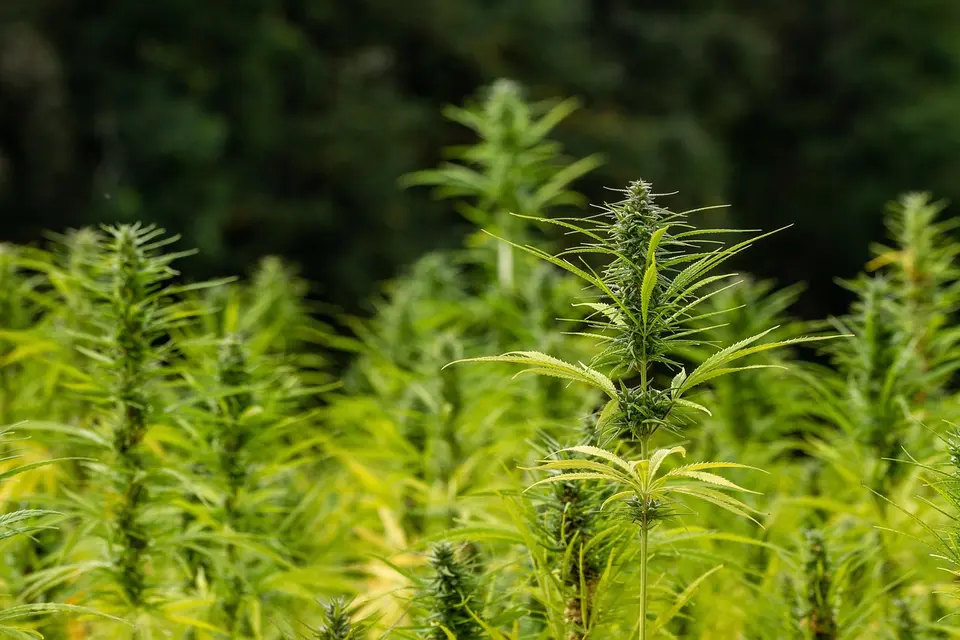
The authority responsible sets the annual cultivation and dispensing quantities in the licence. They must be limited to the quantity expected to be needed to cover the members' personal requirement for their own consumption (§ 13 para. 3 sentence 1 KCanG). In the application, the association states the quantities expected to be cultivated and passed on per year, in grams, separately for marijuana and hashish (§ 11 para. 4 no. 9 KCanG). In addition, daily and monthly limits apply to each individual handover (§ 19 para. 3 KCanG). This article explains how these levels work together.
The annual quantity in the licence
The licence covers joint home cultivation and the passing on to members for their own consumption (§ 13 para. 1 KCanG). It must be limited to the annual quantities (§ 13 para. 3 sentence 1 KCanG). If the number of members changes and the association proves that the required annual quantity has changed, the authority must adjust the licence afterwards (§ 13 para. 3 sentence 2 KCanG). Concrete figures are therefore in the decision for each association, not in the law. The licence is limited to seven years (§ 14 KCanG). The annual quantity also serves as a benchmark for transport between parts of the premises: the quantity transported in each case may be at most one twelfth of the permitted annual quantity (§ 22 para. 3 no. 1 KCanG). The article What does members' personal requirement mean? explains the term.
The limits for each handover
Members aged 21 and over may receive at most 25 grams of cannabis per day and at most 50 grams per calendar month. Young adults may receive at most 25 grams per day and 30 grams per calendar month, and the cannabis may contain at most 10 percent THC (§ 19 para. 3 KCanG). These limits apply per person. More on the monthly limit is in the article How much may members receive each month?
The number of members
A cultivation association may have at most 500 members (§ 16 para. 2 sentence 1 KCanG). The estimated future number of members is part of the application (§ 11 para. 4 no. 6 KCanG). If it changes, the association must notify the authority of the change without delay (§ 11 para. 6 no. 1 KCanG). The article What happens if the club exceeds the limit of 500? covers this.
What applies if the limit is exceeded
Cannabis that exceeds the permitted annual quantity is not eligible for passing on (§ 18 para. 4 no. 3 KCanG). The association must destroy cannabis that cannot be passed on without delay (§ 18 para. 3 KCanG). If it repeatedly exceeds the annual quantities, the authority may revoke the licence in whole or in part (§ 15 para. 1 no. 2 KCanG). The same applies to repeated exceedance of the dispensing quantities under § 19 para. 3 sentence 2 KCanG (§ 15 para. 1 no. 3 KCanG).
Proof and reporting
The association continuously documents the quantities cultivated, destroyed and in stock, as well as every handover (§ 26 para. 1 KCanG). By 31 January of each year, it transmits to the authority electronically the quantities cultivated, passed on and destroyed in the previous year, and the stock at year end, broken down by variety and by average THC and CBD content (§ 26 para. 3 KCanG). Records must be kept for five years (§ 26 para. 2 KCanG). The authority takes these details into account in its supervision (§ 27 para. 2 KCanG). The article How must the club document harvest and dispensing? gives the details.
Annual planning in the association
An association plans cultivation and dispensing over the year so that the quantities in the licence are not exceeded. This includes the number of plants, harvest timing and the distribution among members. The law does not prescribe a planning procedure. The board should record the planning in writing and reconcile it regularly with the documented quantities. Members can raise questions about the planning at the general meeting.
Upper limits are not a consumption guideline
The limits concern cultivation, dispensing and possession. They say nothing about whether the use is tolerable for health. When handing over, associations must inform about risks and point to counselling services (§ 21 para. 3 KCanG). Anyone who uses up the permitted quantities should check their own use regularly. The DHS addiction help directory lists counselling services across Germany.
Practical steps for you
- Ask the association about its handover procedure and the documented quantities.
- Have the daily and monthly limits for your age group explained to you.
- Ask the authority which annual quantities the association's licence contains.
The wording of the dispensing limits can be read at gesetze-im-internet.de.
Frequently asked questions
Is there an annual upper limit for a club?
Yes. The licence must limit the annual home-cultivation and dispensing quantities to what is expected to be needed to cover the members' personal requirement (§ 13 para. 3 KCanG). The specific figure is set out in the authority's decision.
How many members may a club have at most?
At most 500 (§ 16 para. 2 sentence 1 KCanG). The number of members affects the required annual quantity. If it changes and the association proves this, the authority must adjust the licence (§ 13 para. 3 sentence 2 KCanG).
Sources
- KCanG § 11 Erlaubnispflicht
- KCanG § 13 Inhalt der Erlaubnis
- KCanG § 15 Widerruf und Rücknahme der Erlaubnis
- KCanG § 16 Mitgliedschaft
- KCanG § 18 Maßnahmen zur Qualitätssicherung
- KCanG § 19 Kontrollierte Weitergabe von Cannabis
- KCanG § 21 Maßnahmen des Gesundheitsschutzes
- KCanG § 26 Dokumentations- und Berichtspflichten
- KCanG § 27 Maßnahmen der behördlichen Überwachung
- DHS: Suchthilfeverzeichnis
- KCanG § 14 Dauer der Erlaubnis
- KCanG § 22 Sicherung und Transport